
Queen Bee
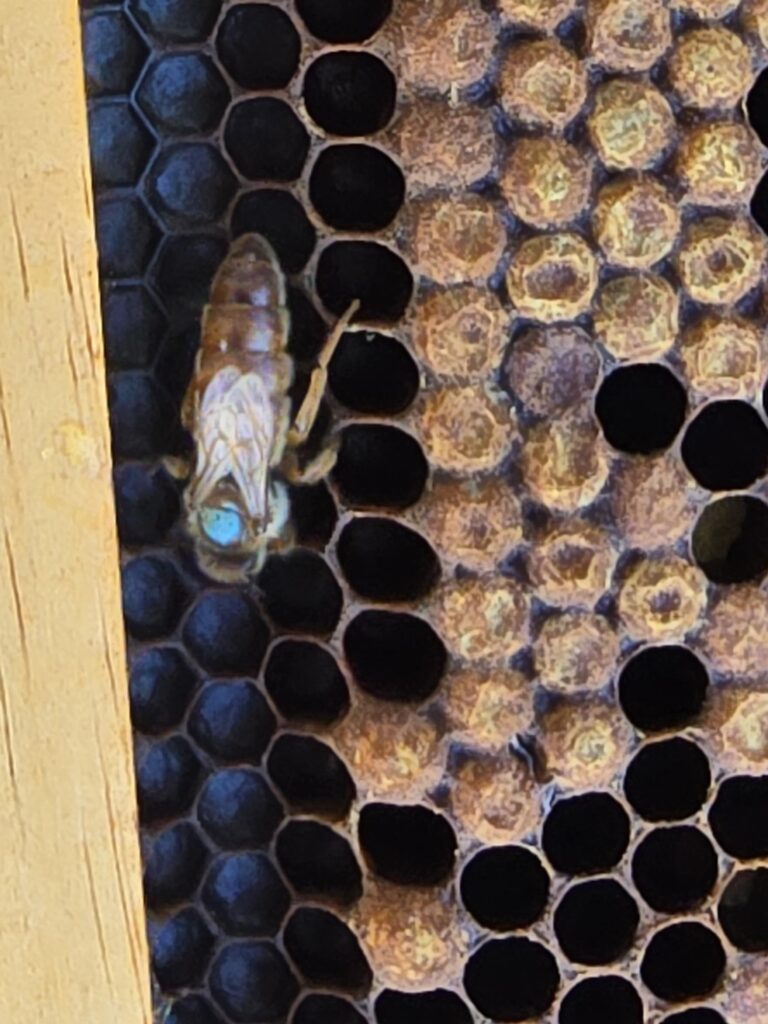
Every healthy hive has just one queen—the sole fertile female among thousands of bees. She’s the largest bee in the colony and its most vital member. Her primary role? Laying eggs. A strong queen can lay up to 3,000 eggs a day, ensuring the hive thrives.
But her influence goes beyond reproduction. The queen produces a special pheromone that signals harmony and stability, reassuring the colony that it’s “queen-right.” Queens are remarkably resilient, living 3 to 5 years, far longer than the average worker bee.
Local Stock
Our queens are Italians raised from our best producing most gentle hives. They are openly mated at one of our two apiaries right here in central NC. We mark our queens and deliver them in a queen cage with a candy plug to help with her introduction to your hive. Our NUC’s and hives contain a mated queen.
FAQs
A queen bee begins her reign after an intense battle. When multiple queens emerge, they fight to the death—only one survives to rule the hive.
A queen bee can control the gender of her offspring. By choosing whether to fertilize an egg, she decides if it will become a female worker or a male drone.
The Italian queen (Apis mellifera ligustica) can be exceptionally prolific—and impressively hefty. She averages around 210 mg (not grams!) in weight—nearly double that of a worker bee—and on peak days can lay as many as 3,000 eggs
Italian queen bees have exceptional pheromone production, which helps maintain colony cohesion and reduces swarming tendencies. Their strong pheromone signal ensures that worker bees stay organized and productive, making Italian queens a favorite for commercial beekeeping.